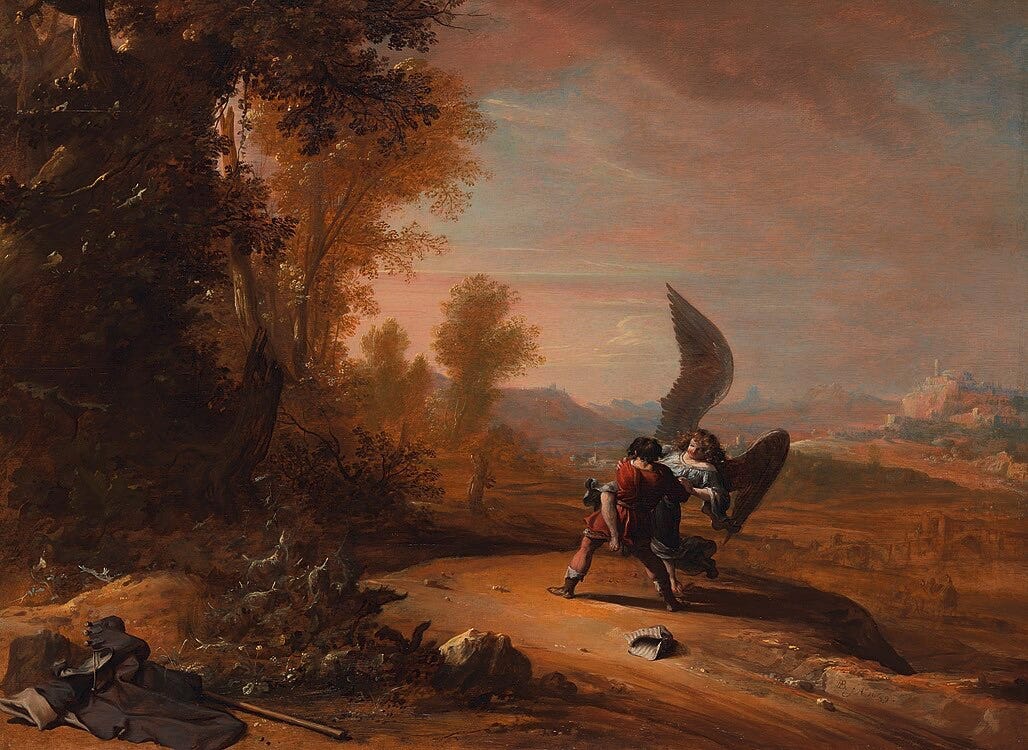
Jacob's Experience, an illustration of God's people.
Behold, at that time I will undo all that afflict thee: and I will save her that halteth, and gather her that was driven out;


Introduction
The Scriptures are so rich with signs (wonders) and symbols. These symbols with their meaning are weaved beautifully, harmoniously and without contradictions to those who are led by the Spirit of God in interpretation. No earthly book can measure to this perfect treasure called the Bible. In this study, we will establish the symbol of “she that halteth”, and further seek to understand what the prophets say pertaining this symbol.
Dear reader, come let us eat and drink from the Fountain of eternal Wisdom!
The story of Jacob
Jacob supplanted his brother, Esau, who was the elder, to receive his father, Isaac’s blessing. This account can be found in Genesis 27.
32 And Isaac his father said unto him, Who art thou? And he said, I am thy son, thy firstborn Esau. 33 And Isaac trembled very exceedingly, and said, Who? where is he that hath taken venison, and brought it me, and I have eaten of all before thou camest, and have blessed him? yea, and he shall be blessed. 34 And when Esau heard the words of his father, he cried with a great and exceeding bitter cry, and said unto his father, Bless me, even me also, O my father. 35 And he said, Thy brother came with subtilty, and hath taken away thy blessing.36 And he said, Is not he rightly named Jacob? for he hath supplanted me these two times: he took away my birthright; and, behold, now he hath taken away my blessing. And he said, Hast thou not reserved a blessing for me? 37 And Isaac answered and said unto Esau, Behold, I have made him thy lord, and all his brethren have I given to him for servants; and with corn and wine have I sustained him: and what shall I do now unto thee, my son? 38 And Esau said unto his father, Hast thou but one blessing, my father? bless me, even me also, O my father. And Esau lifted up his voice, and wept. Genesis 27
Later Jacob had to meet his brother Esau who wanted to kill him. Before that meeting, Jacob, had an encounter with a Special Visitor. This encounter is described in Genesis 32.
24 And Jacob was left alone; and there wrestled a man with him until the breaking of the day. 25 And when he saw that he prevailed not against him, he touched the hollow of his thigh; and the hollow of Jacob’s thigh was out of joint, as he wrestled with him. 26 And he said, Let me go, for the day breaketh. And he said, I will not let thee go, except thou bless me. 27 And he said unto him, What is thy name? And he said, Jacob. 28 And he said, Thy name shall be called no more Jacob, but Israel: for as a prince hast thou power with God and with men, and hast prevailed. 29 And Jacob asked him, and said, Tell me, I pray thee, thy name. And he said, Wherefore is it that thou dost ask after my name? And he blessed him there. 30 And Jacob called the name of the place Peniel: for I have seen God face to face, and my life is preserved. 31 And as he passed over Penuel the sun rose upon him, and he halted upon his thigh. 32 Therefore the children of Israel eat not of the sinew which shrank, which is upon the hollow of the thigh, unto this day: because he touched the hollow of Jacob’s thigh in the sinew that shrank. Genesis 32
This was indeed the beginning of the symbol of “halting”. It signifies the struggle of Jacob with God and his name change from Jacob to Israel after this eventful night. As with many sacred events, this encounter carries a significant prophetic meaning and will, in principle, be repeated or fulfilled in the near future.
She that halteth?
19 Behold, at that time I will undo all that afflict thee: and I will save her that halteth, and gather her that was driven out; and I will get them praise and fame in every land where they have been put to shame. Zephaniah 3
From the prophet Zephaniah, we note an emphasis of time by the phrase, “at that time”. The subject of interest is “her that halteth” and the characteristics thereof are given:
She will saved.
She was driven out.
The referring changes from “her” to “them”, and “they” have been put to shame.
6 In that day, saith the LORD, will I assemble her that halteth, and I will gather her that is driven out, and her that I have afflicted; 7 And I will make her that halted a remnant, and her that was cast far off a strong nation: and the LORD shall reign over them in mount Zion from henceforth, even for ever. 8 And thou, O tower of the flock, the strong hold of the daughter of Zion, unto thee shall it come, even the first dominion; the kingdom shall come to the daughter of Jerusalem. Micah 4
The prophet Micah also gives us a time phrase, “in that day” and the characteristics thereof.
She shall be assembled which means gathered.
She is driven out.
She is has been afflicted.
She shall be made a remnant.
She had been cast off.
Micah describes this entity as the “tower of the flock” and “daughter of Zion”. He also tells us that “she shall be gathered and be made a remnant”. Combining all these symbols and their characteristics, we can see that this “she” is not an individual but rather a reference to God’s people. They are referred to as “she” as a woman in Scripture is used to represent the church or God’s people. The prophet Zephaniah adds again to our understanding with the following verses;
1 Gather yourselves together, yea, gather together, O nation not desired; 2 Before the decree bring forth, before the day pass as the chaff, before the fierce anger of the LORD come upon you, before the day of the LORD’S anger come upon you. 3 Seek ye the LORD, all ye meek of the earth, which have wrought his judgment; seek righteousness, seek meekness: it may be ye shall be hid in the day of the LORD’S anger. Zephaniah 2
Note how Zephaniah places the gathering “before the decree brings forth” and “before the day of the Lord’s anger or wrath”. These symbols point to a death decree issued by God’s enemies against His people. The anger or wrath points to the seven last plagues. The nation not desired at the end of the world is God’s people. Our Lord Himself tells us this in Matthew 24:9, Mark 13:13, and Luke 21:17.
13 And ye shall be hated of all men for my name’s sake: but he that shall endure unto the end, the same shall be saved. Mark 13
8 All these are the beginning of sorrows. 9 Then shall they deliver you up to be afflicted, and shall kill you: and ye shall be hated of all nations for my name’s sake. Matthew 24
17 And ye shall be hated of all men for my name’s sake. 18 But there shall not an hair of your head perish. Luke 21
Therefore, Zephaniah’s call is for God’s people to be gathered before the death decree and the seven last plagues. Isaiah speaks of the same time, referring to God’s wrath or seven last plagues as the “indignation” and focuses on what the saints will do at that time. Symbolically, they will enter into their “chambers”, “shut doors” until the seven last plagues are over.
20 Come, my people, enter thou into thy chambers, and shut thy doors about thee: hide thyself as it were for a little moment, until the indignation be overpast. 21 For, behold, the LORD cometh out of his place to punish the inhabitants of the earth for their iniquity: the earth also shall disclose her blood, and shall no more cover her slain. Isaiah 26
The shut door is symbolic of the close of probation which Daniel describes as Michael standing up. Note, how in line with the other prophets, Michael standing up marks “a time of trouble, sun as never was…”
1 And at that time shall Michael stand up, the great prince which standeth for the children of thy people: and there shall be a time of trouble, such as never was since there was a nation even to that same time: and at that time thy people shall be delivered, every one that shall be found written in the book. 2 And many of them that sleep in the dust of the earth shall awake, some to everlasting life, and some to shame and everlasting contempt. 3 And they that be wise shall shine as the brightness of the firmament; and they that turn many to righteousness as the stars for ever and ever. Daniel 12
God willing, in this next part of this study, we will look at how this time is also called the “time of Jacob’s trouble” by the prophet Jeremiah.